Welcome to my World Builder Series. As a fantasy writer, I build new worlds for most of my stories.
Since I write large fantasies that span trilogies (yep, I can’t seem to contain my stories within a single novel) I get pretty in-depth with my worlds.

Now, despite being a world builder, I am not the sort of writer that includes pages of world descriptions in huge chunks.
It can be easy to fall into the trap of sharing your world in this way, but all you end up with is large blocks of description that many readers will skip in order to get to the action.
I’m not surprised, personally, I find it dull reading excessive descriptions even about a strange new world.
Instead, I build my worlds and then weave them throughout the story, bringing in information gradually.
I prefer this way in my writing and my reading. I don’t want extensive descriptions about a world that covers 4 pages right at the start before we even meet a character.
However, since I write my stories as series, I do a lot of world-building because my characters usually end up all over the world at some point.
With this in mind, when you start planning your world you may end up with a lot of world-building content with some of it never making it into your story. That’s fine – a writer should always have more details than just what’s in the novel.
I’m going to start slow regarding some basics and (obviously) I am going to use the Earth as an example of things to think about when you are creating a world:
The Sun
Our planet has only one Sun which the Earth orbits. This orbit is what defines our year as being 365 days as one full rotation around the sun takes approximately 365 days. (We say approximate as those extra hours eventually add up every four years to add the extra day that occurs in a leap year.)
Our planet is at the right distance from the Sun to be within the Habitable Zone (also known as the Goldilocks Zone) that allows life to thrive and so the temperature over most of the world is sustainable.
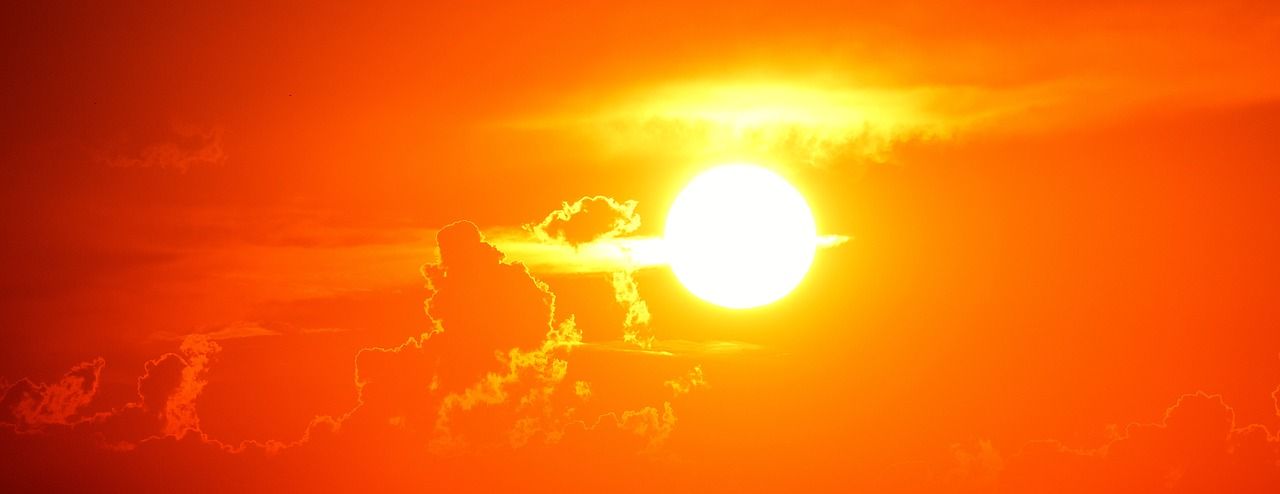
The Sun is also our greatest energy source and most of our plants use the process of photosynthesis which converts light energy into chemical energy that can eventually be released to fuel the plants’ activities. Including producing oxygen which most organisms need to survive.
Our planet’s axial orbit (the Earth rotates on an axis) and one revolution is what defines our day (24 hours) where half the Earth is in sunlight and the other half in darkness.
The Seasons
The Earth is tilted on its axis. This means that as it goes around the Sun there will be parts of the Earth that are further away from the Sun than others. This is what creates the seasons and depending on which hemisphere you live in will depend on when you experience which seasons.
So, for example, when the North Pole is pointing slightly away from the Sun due to the axial tilt, England will be further away from the Sun than say Australia because the lower half of the Earth will be pointing towards the Sun.
During this time the Northern hemisphere would be in the season of Winter and the Southern hemisphere would be in the season of Summer.
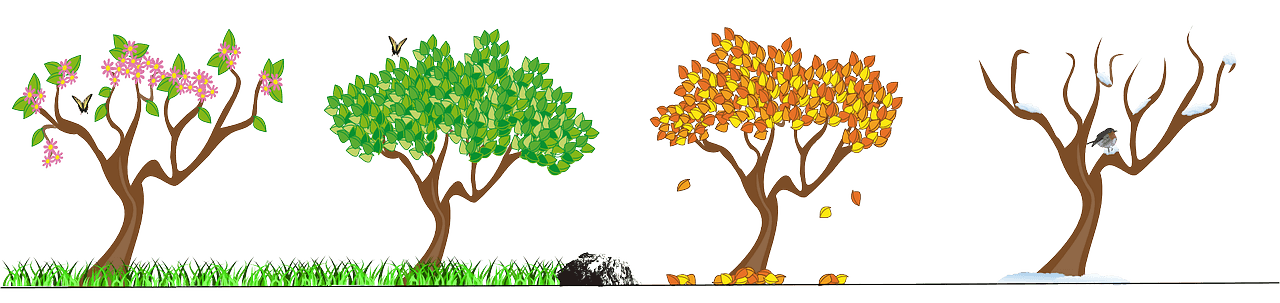
Six months later when the Earth is on the opposite side of the Sun, halfway through its orbit the Northern hemisphere will be tilted towards the Sun and so will be in Summer while the Southern hemisphere will be tilted away and will experience Winter.
Additionally, areas near the equator(the ring around the middle of the earth), are much less affected by this so their weather is quite constant. This is due to their distance from the Sun at different times of the year.
Your World
So, now that the simple science lesson about the Sun and the Seasons is over, time to think about your world.
- Does your planet orbit a Sun?
- Maybe your planet is in the centre and the Sun orbits around it?
- Maybe there is more than one sun?
- What would this do to your days and nights?
- Is your planet at a greater distance from the sun than Earth is to our Sun?
- Are your years longer meaning that winter and summer last a greater length of time?
- Is your planet flat? (like Terry Pratchett’s Discworld)
You don’t have to be writing sci-fi in order to consider such things, as I mentioned in the above questions, Discworld by Terry Pratchett is a flat world resting on the back of four elements that perch on the shell of a giant space turtle. So, the author had to work out just how the sun and moon orbited this very strange world.
In Fantasy of Frost by Kelly St Clare there are two worlds that rotate. This rotation takes 3 years. The world furthest from the sun is an icy world and the one closest is a hot world, that suffers fires in the sectors that rotate closest to the sun.
So, things like your planet, the sun, moon, and seasons can all have an effect on the people and animals living on the planet. It can also be an interesting addition to your world-building that your readers might enjoy learning about
Does your planet have a greater axial tilt? Imagine the Earth tilted completely on its side with its poles pointing towards the Sun, half of the planet would be in the dark for half of the year.
Maybe you won’t need this level of detail for your story, but at the same time look at what can be opened up just by thinking about these things.
Suddenly your story could incorporate another aspect, maybe a winter that lasts for ages and leaves the planet so cold for so long that few survive.
Maybe there is a race of beings that have adapted to the total darkness of the tilted planet and retreat below ground when it finally swings into the light.
Just thinking a little more about the science of your planet and something as basic as days, years and seasons can give you further ideas to work into your story.
A Quick Mention of the Moon
We can’t mention the Sun without giving a nod to the Moon. Despite being so much smaller than the Sun, the Moon has an impact on the Earth. The Moon’s gravitational pull causes our tides.
More articles on my World Builder Series.
~ ~ ~
I hope you found this useful and remember, if you like my tutorials, why not follow my blog. I upload new posts on Fridays. Don’t forget to share the love and click like or add this to a Pinterest board or some shit. Do feel free to drop me a comment if you 🙂
Happy writing

Want to find me on Insta? Join my Newsletter?
Then visit my LinkTree to find everything
~ ~ ~
Source: images from Pixabay
© Ari Meghlen. All Rights to the works and publications on this blog are owned and copyrighted by Ari Meghlen or their respective owners in the case of guest posters, podcast hosts etc. The Owner of this site reserves all permissions for access and use of all documents on this site. NO AI TRAINING: Without in any way limiting the author’s [and publisher’s] exclusive rights under copyright, any use of this publication to “train” generative artificial intelligence (AI) technologies to generate text is expressly prohibited. The author reserves all rights to license uses of this work for generative AI training and the development of machine learning language models.
 Author Ari Meghlen Official Website
Pingback: How To Build Your World: Landscapes (Pt 1) – Author Ari Meghlen Official Website
Have you watched Pitch Black?
This is a perfect movie to see how strange a world is. For 99% of the time, the three suns keep the planet completely lighted. And then for 1 day every 20 years, all the suns perfectly align with the moon around the planet, and the light goes out.
Once it does, a sub terrain predatory race comes out and eats anything it can find. Their only weakness, sunlight or light in general hurts them. They sense things through echo location. So other life has evolved to shine light which makes them stay away.
It was an awesome movie. Man vs enviornment.
I have seen that movie and enjoyed the premise. I liked the bit where she was moving the model until it showed what happened with the three suns.
Pingback: How to build your world: Fauna | Ari Meghlen – Writer | Blogger | Bad card player
Pingback: World Building: Water | The official site of Ari Meghlen