In my last non-podcast post, I mentioned my Goal Tasks and how I use a Kanban board to track my goals. So, today I am sharing more of that here!

What Is A Kanban Board?
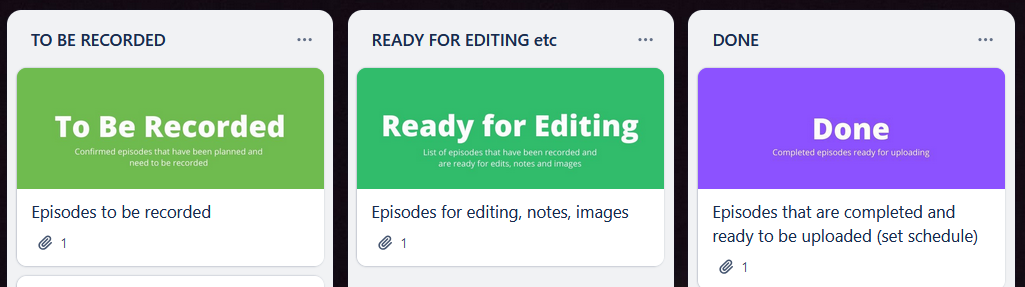
It’s simply a tool for managing your workload and tracking your progress. The visual look of a Kanban board is made up of columns or “lists” and tasks or “cards”.
Columns are usually things like To Do, In Progress and Completed. You may also have extra lists such as Awaiting Response (if a task requires someone else’s input), Backlog, Up Next, On Hold etc… you get where I’m going with this.
For more visual people, it can be really useful to have this style of organisation tool to keep you on track.
If you ever use Trello, you will recognise this style as a digital Kanban board. On each board, you create lists and add individual cards to those lists that can represent individual tasks or longer tasks with a checklist within for the smaller step-by-step tasks.
Okay, so we are all now familiar with Kanban boards? Good.
Physical Over Digital
For my goals, I use a physical Kanban board rather than a digital one. I still use my Trello boards every day and it has been awesome for keeping me organised and on track, especially with the podcast.
I am not going to lie and pretend some of my lists on one of my boards aren’t a flaming hot mess, but mostly I’m pretty good with it.
So, if I think Trello is all kinds of bees-knees awesome, why the heck am I using a physical board?
Simple, I need to be able to SEE things even when I’m not on my computer. (I hate having things on my phone, so syncing the Trello app there won’t help).
It’s like my diary, as in like a calendar diary, not a “Dear Diary, today I took a spin class and bones I didn’t even know existed now hurt” kind of diary, I like to have a physical copy rather than using Google Calendar. Just works better for me.
Having a physical Kanban board I can scan every time I walk into my room, even if I’m not booting up my PC is a game changer.
In the end, you always need to work with what helps YOU the most. You know you better than anyone else knows you, right?
Making My Kanban Board
I was inspired to make my own physical Kanban boards with Post-it notes, from author Sarra Canon. If you want to see her own, way more stylish version than mine, check out her Youtube channel.
So, the premise is the same as a digital board. You need “lists” and you need “cards”.
Due to my lack of space, I don’t have To-Do, In Progress and Completed. I have To-Do and Completed only.
Now, I run my goals quarterly these days. So my boards are set up every quarter. Since I don’t have wall space to allow me to spread out I use simple, A4 paper that had been laminated (for another project). These are my To-Do boards.
Next, I use mini Post-It notes as my Task Cards. These are the individual tasks I need to complete. They could be a standalone single task or one of many tasks that complete a project.
Using different coloured Post-It notes (and pens), I colour-coded my Tasks.
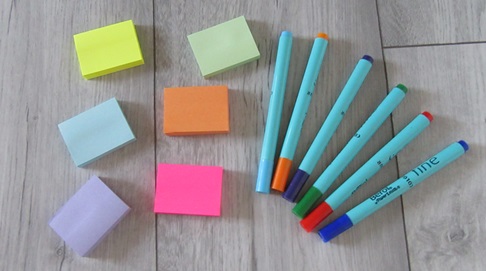
For example:
- Blue = exercise
- Light blue = meditation
- Orange = writing
- Green = business
- Yellow = social media and newsletters etc
These wouldn’t have been my first choices but I was limited at the start on which colours I could get, anyway, I digest.
So I consider what goals I want to complete in the quarter, and I note them down on paper. I then work out what the individual tasks are that I need to complete to get that goal done.
For example, I am doing the 85K90Day Challenge. So, I broke this task down into 8 x 10,000-word tasks and a 5,000-word task.
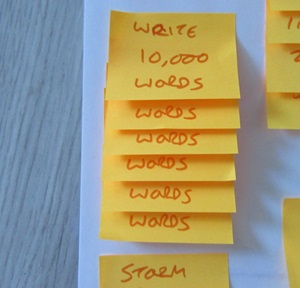
It doesn’t mean I have to sit down and write 10k in one sitting. But it did give me a boost when I hit my first 10k and got to remove that first post-it task from my list.
This is another thing, having small bite-size tasks makes it more motivating. You know, like if you have a to-do list and you add some quick and easy things on so you have fast tasks you can tick off. It’s a nice little dopamine hit.
Slogging to write 85k words and not being able to remove that task card for 90 days can be pretty demoralising, especially on days I’m tired or struggling to focus.
It’s that old saying, “How do you eat an elephant? One bite at a time.”
Once I have my quarterly goals decided, and my accompanying tasks worked out. I then write out the tasks on individual Post-it notes and layer them on my laminate papers.
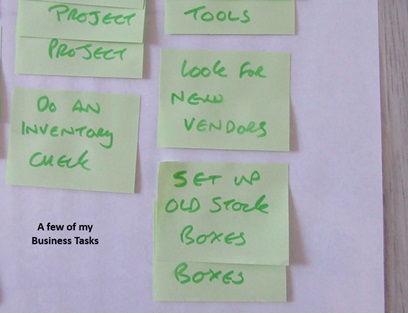
I have “boards” for my writing, business, podcasting and one for exercise and social media.
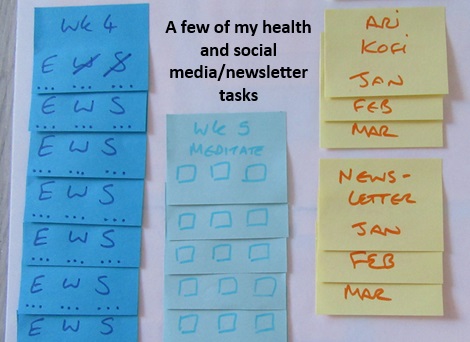
Please excuse my TERRIBLE handwriting.
As you can see for things like meditating and exercise, I break it down into how many (minimum) I want to do a week to complete the task and create 13 weeks’ worth of tasks to track.
Once the task is complete, I simply remove it from the board, fold it up and pop it into a glass jar. There is something so delightful about seeing your completed tasks build up.
This is 2024’s completed tasks (sans the 1st quarter tasks, as I forgot to save them).
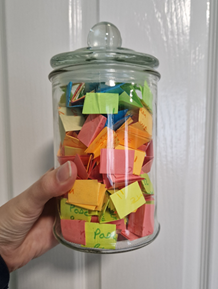
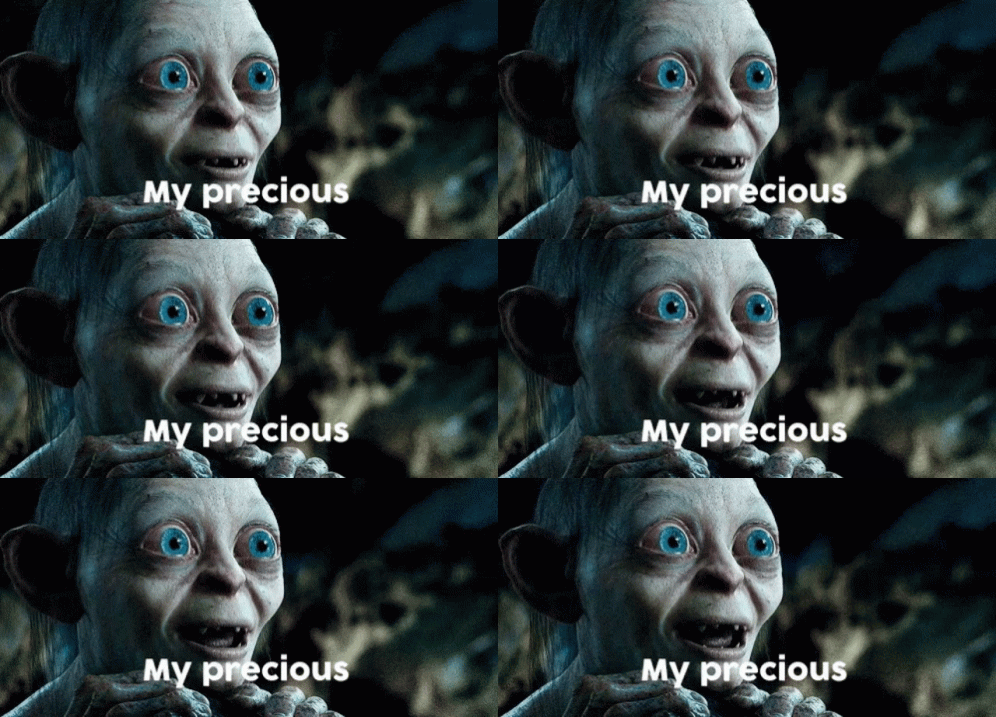
Since I started doing this, I find I complete a lot more tasks. My little goblin brain loves all the pieces, the laminated boards (which means the post-its stick well and remove well), the bright colours, the small tasks, and the jar that I get to stare at like this:
~ ~ ~
Okay, so that is how I keep track of my quarterly goals and turn them into bite-sized tasks that are easier for me to complete. Every part of it gives me that much-needed dopamine hit and yes, I am already driven to fill this year’s jar with even MORE Post-its!
How Do You Track Your Goals?
Happy tasking!

Want to find me on Insta? Join my Newsletter? Follow the Podcast?
Then visit my LinkTree to find everything
~ ~ ~
Source: Images from Canva
© Ari Meghlen. All Rights to the works and publications on this blog are owned and copyrighted by Ari Meghlen or their respective owners in the case of guest posters, podcast hosts etc. The Owner of this site reserves all permissions for access and use of all documents on this site. NO AI TRAINING: Without in any way limiting the author’s [and publisher’s] exclusive rights under copyright, any use of this publication to “train” generative artificial intelligence (AI) technologies to generate text is expressly prohibited. The author reserves all rights to license uses of this work for generative AI training and the development of machine learning language models.
 Author Ari Meghlen Official Website
Pingback: Hello 2026, Let’s Purge & Plant – Author Ari Meghlen Official Website
Pingback: Where Have I Been? – Author Ari Meghlen Official Website