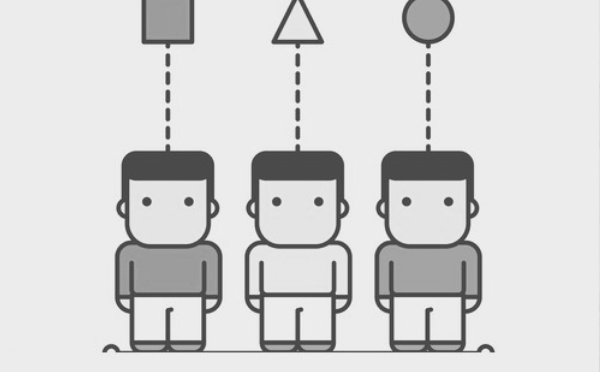
I’ve been receiving questions about how to choose a writing Point of View (POV) so decided to make this tutorial to offer advice on the different types of POVs you can write in.
There are several points of view a writer can choose when writing their novel, all with their own pros and cons.
First Person POV (limited)
This definitely seems to be a popular one. First Person is where the narrator is (almost always) the protagonist.
Example: I always knew the police would find out eventually; keeping murder a secret was not exactly easy.
The Good
Many writers choose this especially for their earlier works. It is considered very natural to write in. After all, we live inside our own heads and so that nice internal monologue we have allows you to completely understand how to write in this point of view.
You can also use this point of view to really get a strong sense of your character and help your readers really connect.
They are seeing and hearing everything your protagonist is, instant connect (especially with some readers who find reading a character of the same gender, makes them feel even more connected and involved.).
The Bad
It is considered limited because you are just following one character around. Imagine watching a movie and only following one single character.
Let’s take Die Hard (‘cus I loves me some Die Hard) – Spoilers for all those who haven’t seen it… which begs the questions WHY haven’t you seen it?
If you only followed John McClane you wouldn’t see Hans Gruber talk with his men, or the exchange between Al Powell and Dwayne Robinson after Ellis getting killed.
It would be a very different movie.
You also have to spend all your time with just this one person. They have to be doing things, saying things all the time that move the story along. You also never get to see any subplots that could have developed with other characters without the protagonist around.
While this was seen as a positive, we now have the negative – there have been cases were a character’s gender affects how the reader can connect with them.
Some men struggle to read first person books where the protagonist is female, and vice versa. This means that some readers will avoid books where the protagonist is not their gender – especially in first person where they are following this one character around.
First Person POV (unlimited)
There is a way of having first person unlimited, the way writers have done this, is to shift to a different character on a different chapter/section.
So, chapter 1 may be written as first person Anna and then chapter 2 may be written as first person as Andrew.
The Good
With this method, you get the deeper connection from first person, but also allow your readers to get different perspectives and so expand your experience within the book’s world.
The Bad
There is still a limit, because this method doesn’t really lend itself to too many points of view. I personally think 3 pov’s are the maximum before it stops working efficiently and can get a little messy.
Also, you have to be super clear who’s point of view it is, otherwise your reader may get confused.
Third Person POV (omniscient)
This definitely used to be the most common, the go-to POV of choice especially for fiction, not sure if that’s still the case now.
Third person is where the narrator narrates using he, she, they, them, it etc. The narrator is separate from the characters unlike in first person, where the narrator is directly one of the characters.
The omniscient of this POV is where the writer can show the view of any character even within the same scene. So, in chapter one we may see and feel what the protagonist is feeling as they are about to come face to face with the villain, and then we shift to show what the villain is doing at that point.
It can often come across like “head-hopping” if not done well. Remember, the narrator is SEPARATE from the characters – an “all-knowing-being”.
To understand the concept of the narrator being separate, it is in third person POV omniscient where you may get a line such as “little did they know…” which shows that the narrator knows something that none of the characters are yet aware of.
The Good
This allows the reader to get a feel for several characters that the writer wants to show. It also allows you to drift off and see other subplots. Instead of just following one or two characters around and watching their day, you hop about and see everything.
This multiple viewpoints can really expand your novel, allowing you to understand why characters react and act the way they do.
It increases the ability of having subplots with other characters – great for longer stories with a larger cast of characters.
It also relieves the writer from having to keep one character hoop jumping through the entire novel.
Also, if any of your readers take a dislike to your protagonist, then they can still enjoy your book by enjoying the other characters.
The Bad
It can be harder to build up a connection between reader and characters because they don’t have that more intimate connection.
If you aren’t clear with who the narrator is with at any given time, you can confuse your reader and make the plot sluggish.
You have a lot more to keep an eye on. You need to remember and keep track of all your characters, what they are doing, where they are going, how they are reacting to things.
You have to balance how often you jump between characters especially within one chapter, as this can leave a chapter/story fragmented and hard to follow if your narrator are constantly jumping between characters.
You have to work harder to create individual unique voices for your characters, otherwise they can all end up sounding the same.
Third Person POV (limited)
This is obviously still using he, she, it etc but instead of going into multiple characters head within chapters, you are limited to seeing through one character’s perspective at a time. So, even if you have two characters in a scene, you only show one of their thoughts and feelings.
For multi-character stories, the POV is done staggered. So, one chapter may be in one character’s pov and the next chapter will follow the second character’s pov. Or you can shift between characters’ povs with the use of hard breaks.
The Good
While you don’t get the deeper connection that comes with first person, you are still given a strong sense of the character you are with as you read.
Also, it’s been said that this pov allows for better connection if you have, say, a female reader and a male character. Seeing how they react and feel without being “in their head” that comes from first person – is said to be easier to enjoy. Of course, that is personal preference.
It also allows you to stay focused and stops you getting too overwhelmed trying to keep track of several characters. By staggering the characters’ different povs you stop constant “head hopping” which can ruin the flow of a story.
The Bad
If you only follow one character you can end up with issues of pacing as that character needs to be around for important scenes, but if anything is happening in the background with other characters – you have to find a way to explain it even if the pov character isn’t there
This can create some exposition and pacing issues. It’s not a pov I would personally recommend. But as always, you do you!
Second Person POV
I thought I would throw this in as a number of people have asked me about it. After all we hear about First and Third person a lot which does leave people wondering, what’s Second person?
It’s all “You”.
Example: You have to catch the train and it’s late again and you’re going to get it from your boss. Why does this always happen on Monday? You really to find another job or maybe just get out of this damn city.
The Good
It’s weird and pretty unique in books, so it would definitely make you stand out. It would also be quite challenging, (which you might like to take on) to write because it doesn’t come as naturally as first or third person.
The Bad
It’s weird and pretty unique in books for a reason. It doesn’t read that well and many readers just won’t like reading it. Hence why it’s not really used.
But hey, if you want to do something different and aren’t looking to sell loads of copies of your book, maybe give it a whirl.
What I Use
For those of you desperately wanting to know which POV I write in, currently, that would be Third Person Limited or Omniscent. These have always come the most natural to me and I like the freedom of building more complexity that needs to follow different characters to work.
In fact, I never used to like reading first person books because I found them frustrating that I never got to follow other (often more exciting/interesting) characters. I like being able to see what other characters are doing and how they react to each other.
I have now read some first person books that I love, but the authors have really made them captivating. Other first person books I hate because I just can’t connect to the protagonist, or worse I just don’t agree with how he/she is reacting to things.
So in truth, I reach for a third person book more often than not and (almost) all my favourite books are third person.
Conclusion
So, which POV should you write in? The one that you want, the one that works the best for you.
If you really aren’t sure, then write a scene first in one POV then in another POV. Believe me, you will probably find one that just feels natural either to you or to the story you are trying to tell.
In the end, there is no right or wrong answer. Some readers will love first person, some will love third person, some may even really love second person!
Don’t think about your readers when you pick your POV, think about which feels best for your writing, your characters, your story.
~ ~ ~
What POV do you prefer to write in?
Happy writing

Want to find me on Insta? Join my Newsletter?
Then visit my LinkTree to find everything
~ ~ ~
Source: Images from Pixabay
© Ari Meghlen. All Rights to the works and publications on this blog are owned and copyrighted by Ari Meghlen or their respective owners in the case of guest posters, podcast hosts etc. The Owner of this site reserves all permissions for access and use of all documents on this site. NO AI TRAINING: Without in any way limiting the author’s [and publisher’s] exclusive rights under copyright, any use of this publication to “train” generative artificial intelligence (AI) technologies to generate text is expressly prohibited. The author reserves all rights to license uses of this work for generative AI training and the development of machine learning language models.
 Author Ari Meghlen Official Website
Pingback: Let me Introduce you to my WIP: Dark Hart
Pingback: How to give your novel a strong Edit | Ari Meghlen – Writer | Blogger | Bad card player
Pingback: How to write a synopsis for your novel | Ari Meghlen – Writer | Blogger | Bad card player