As mentioned yesterday, you get a bonus post this week. Another post from Wilmar Luna who shares his answers to some interview questions 🙂

Q01 When did you decide to become a writer?
I first began writing stories featuring my friends and me at the age of 12.
Since I was a video game addict, I often imagined my online amigos as thieves, detectives, elite Special Forces commandos, and anything else that would require a team.
I was often the main protagonist and had a tendency to write myself as the guy who got to be with his high school crush. Sounds kind of pathetic now that I think about it. (No, the high school crush was not meant to be. Dodged a bullet with that one.)
It was a hobby, it was fun, and my friends enjoyed my stories, sloppy formatting and all. Not once did I consider writing as a career even as I continued making up stories to this day.
That changed around 2002, a few months before the first Spider-Man movie with Tobey McGuire came out. I had written a story about a woman who receives a nanosuit which transforms her into a superhuman. At the time, I just thought this to be another story for the slush pile, but as the years went by that one story never left my mind.
I kept seeing that Wonder Woman was always second fiddle when Batman or Superman was around. Black Widow, second fiddle to Captain America and Iron-man.
Rarely was there a film or a comic where the men were second fiddle to the women. People like to extoll Wonder Woman as a feminist icon, but as soon as Superman enters the picture, all focus and decisions are on him.
I was also constantly disappointed by the porn star treatment of the female superheroes. Wonder Woman is an amazon with muscles, but her physique is inconsistent depending on the artist.
Even She-Hulk, a woman with the name Hulk at the end, is often drawn as a tall volleyball player. Yet, Superman and Batman are almost always guaranteed to be drawn with their idealized, muscular physiques.
And here I was, sitting on a character that was muscular because she needed to be, the decision-maker, the lead in her own book, and what was I doing with said character? Letting her collect dust on the shelf.
Once I decided to open Pandora’s Box, there was no turning back. I wanted to tell more stories in different genres and publish them to share with the world. In truth, I just want to be a storyteller and writing was one of the options available to me.
Q02 Did you find people supportive when they found out you were a writer?
Oh absolutely. Friends and family completely supported me in becoming a writer. My girlfriend has on many occasions, allowed herself to suffer my constant discussions around brainstorming ideas.
Now if I said I was going to be a writer full-time and quit my job? That would be a different story.
Q03 Would you ever want to see a story of yours turned into a movie?
Every story I write is always imagined first as a movie. When I went to college, I had studied video editing, television production, and creating special FX using After Effects and other animation/compositing software.
The visual medium is in my blood, so my books will always be written with the hope that they would someday turn into movies. However! And this is an important ‘however’, a great book will always be superior to a great movie.
I will always prefer The Shining novel over the movie. Cue the booing.
Q04 What’s the hardest part of the writing process for you?
Coming up with ideas that enhance the story. Ideas are a dime a dozen, but not all of them make sense in the context of your novel. Anyone can write a great action scene where the protagonist goes to kill a character.
I can write one up right now and have it done in less than an hour. But when people ask why the protagonist killed the character, those questions are infinitely harder to answer through writing.
Also, I receive many compliments on my action scenes, but here’s a dirty little secret: Writing them is tedious and often my least favorite part to write. When they work, they work, but getting them to that level is boring.
Q05 How do you make time to write?
I have an hour and a half commute from my home to my job in New York City. I take the train. That’s pretty much the majority of my writing time these days. For any commuting authors, I use a fairly cheap laptop that I DON’T connect to the Internet while riding the train.
It’s much easier to avoid distractions when connecting will eat up your data plan and money.
Once I get to work, I connect to the Wi-Fi, let the documents sync to my Microsoft OneDrive folder, and voila. My work is backed up and accessible on the cloud. If I want to write on my lunch break or on my home PC before bed, I can do so.
Q06 You’ve written a few books now, looking back, what would you have done differently?
This is a tough question, only because I’m a strong believer that everything happens for a reason. I guess the one thing I would wonder is if I had hired a different editor, instead of a writer moonlighting as an editor, could I have avoided the problems that plagued the first book? The truth is I was inexperienced and fumbling around with things I did not understand.
I should have read more, written more (no publishing, just practice), and spent more time hiring the right editor who would build me up rather than tear me down. Editors are the harbingers of doom so make sure to hire the nicest one.
Q07 Can you give the readers some details on when to hire an editor and what is expected when dealing with an editor?
Picking the right editor is the single most important part of your writing process and should never, ever be taken lightly. You may think your manuscript is solid and simply needs some copy editing and proofreading, you’re wrong.
Only authors with books under their belt and years of experience can bypass a developmental edit, but if this is your first rodeo, you’re going to get bucked.
So it is in your best interest to hire a developmental editor first. For those of you new to the process, the developmental editor analyses and fixes structural problems with the book.
Plot holes, empty character motivations, unclear goals, a story that doesn’t make any damn sense, or worse, is boring as hell.
A copy editor works with language. They will enhance your sentences, make them punchier, add clarity, and generally make you sound like a genius.
The proofreader will look for misplaced commas, missing periods, typos, and generally does the spit shine on your manuscript.
Depending on where your strengths lie will determine who you need to hire. If you’re great with words, maybe you don’t need the copy editor.
If you’re great at spotting mistakes, skip the proofreader.
If you plot your story down to a tee before you ever put a single character on the manuscript, skip the developmental editor. (This won’t be many of you.)
But this is your first time right? You might have to do all three. If you have a weakness in one area and you don’t pay an editor to help you fix it, you will pay for that mistake in the reviews. Go ahead, don’t listen to me, see what happens for yourself. Learn the hard way if you have to, but don’t say I didn’t warn you.
For those of you taking this matter seriously, here’s what you can expect when working with an editor.
Weeks or sometimes months of silence. I generally prefer weekly updates when I hire a new contractor and will request these updates in the contract. The more I begin to trust a contractor, the less I need in terms of updates.
The most important thing you need to do is have the ability to get your money back. Get receipts, sign contracts, request invoices, use Paypal so you can request your money back if they fail to deliver.
Assuming everything is all well and dandy. You’ll get your manuscript back. There will be notes, lot’s of notes, heartbreaking notes, notes that you don’t want to read, notes that make you angry with yourself, notes that make you think you shouldn’t be a writer. This is all going to happen and depending on your editor, it’s going to suck.
This is the time to ask your editor questions, discuss their objections, brainstorm solutions, and then at the end of the day, write again. Your manuscript will be stronger, trust me.
Q08 What challenges or difficulties did you encounter when writing your novels?
Continuity is a b-word. It grows and grows into a tangled spaghetti mess of cause and effect where EVERY detail must be accounted for.
If the protagonist was shot in the winter and in the follow-up novel a character says the protagonist was shot in the summer, that’s going to confuse your readers.
Q09 What’s the single best piece of advice you can give to new writers?
Allow yourself to fail. You’re not going to come out of the gate writing like Stephen King without suffering a few setbacks.
Failing is what teaches us to become better writers. Do your best to write your manuscript to the best of your ability and let it go. You will either learn to write better or realize that writing is not for you.
Q10 Are there any authors you would love to meet in person?
Stephen King, obviously, but if I was going to pick someone that’s a bit more obscure, I would love to meet Kevin J. Miller. He’s the author of Raven One and was a former Navy fighter pilot. Since I love military jets and aircraft, meeting him would be awesome.
Q11 Can you tell us why you love writing?
Writing allows me to pretend that my dreams are real. What more do you need?
Q12 In your novels, who is your favourite character and why?
It is, and will always be, Cindy Ames, the Silver Ninja. After spending over a decade with this character in my thoughts, watching her change and grow into a fully fleshed-out character, how can she not be?
She’s cunning, resourceful, heroic, vain, vindictive, impulsive, caring.
~ ~ ~ ~
About Wilmar
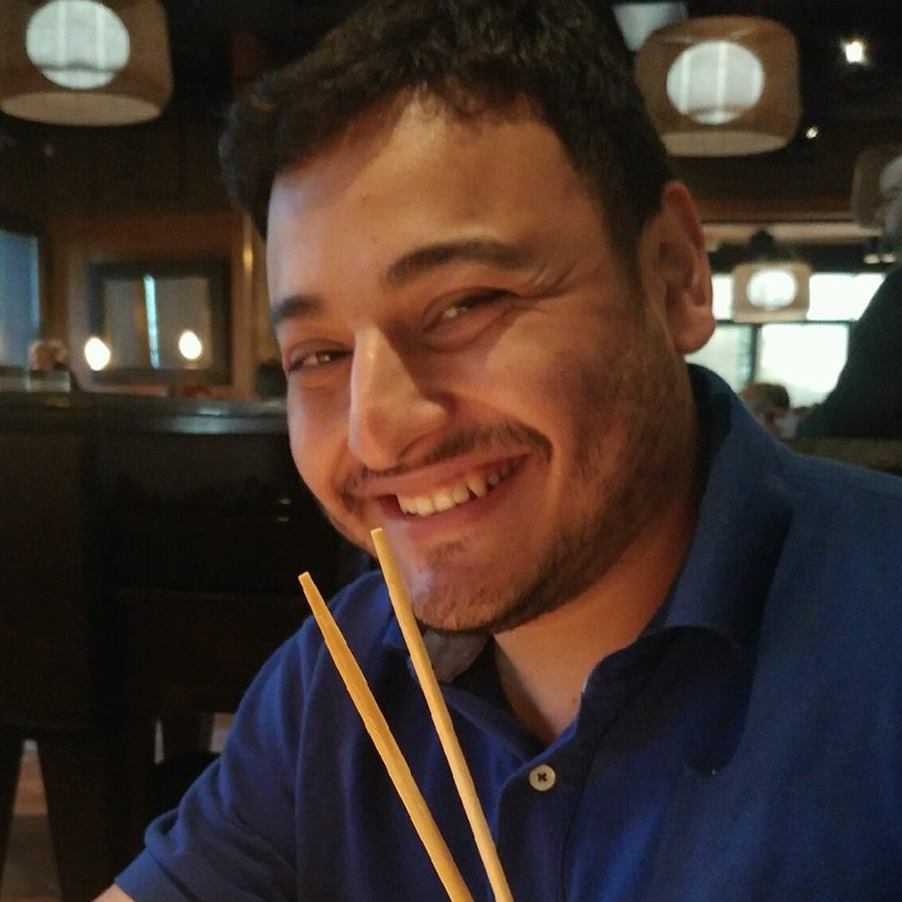
From the time he put on Superman pajamas and leapt off a flight of stairs, Wilmar Luna has been captivated by stories of heroes saving the day. As he grew older, his fascination with 90’s pop culture, video games, and movies filled his overactive imagination with fantastical worlds and legendary heroes.
He found an outlet for his creativity by studying video editing and motion graphics design at Mercer County Community College. After graduating in 2008, he freelanced throughout New York City and has edited numerous indie films, freelanced for the NFL, and also worked with the cinematics team at Rockstar Games. He assisted with the launch of Grand Theft Auto V and was also involved in the creation of cutscenes for Red Dead Redemption 2.
After years of watching his name scroll in other people’s credits (please don’t remove me), Wilmar wanted to develop his own projects and ideas. He decided that if he wanted to tell stories of empowered female characters, paranormal detectives, and ghost stories, he would have to venture off on his own.
Wilmar published his first novel in 2012 and his second in 2014. He also published several horror short stories on Wattpad, as well as concept ideas for a gothic fantasy novel. In 2018, Wilmar completed his novel The Silver Ninja: A Bitter Winter, fulfilling his childhood dream to create an empowered, independent, brand new superheroine for a generation of readers hungry for new stories.
Check out other posts from Wilmar:
Fight Scenes – Believable vs Realistic Fight Scenes
Don’t Give up – Be Afraid to Give Up, Not to Fail
~ ~
The Silver Ninja
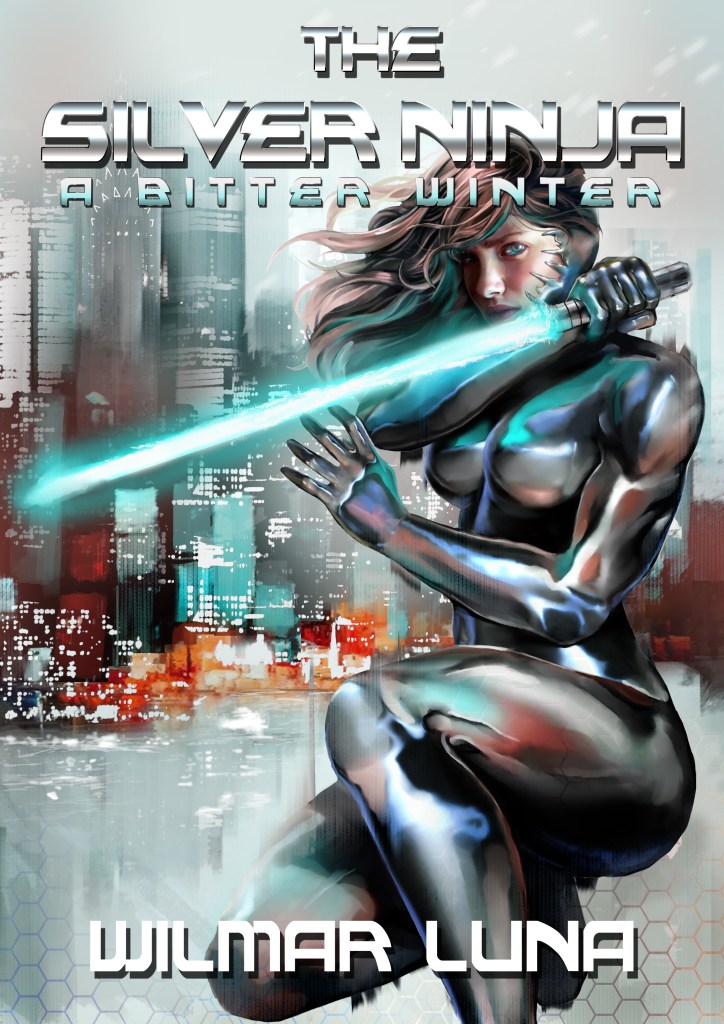
Cindy Ames was once human. After a failed murder attempt on her life, Cindy was left crippled and hungry for vengeance.
She sought power and stole an experimental technology to transform herself into an unstoppable, superhuman, killing machine. With it, she vowed to bring justice to the killer who ruined her life.
But when the deaths of innocent people plague Manhattan, all evidence points to her.
Has Cindy’s quest for revenge gone too far?
The truth she discovers about herself may be more than she bargained for.
Superpowers can save a city but break a hero.
~ ~ ~
Thanks again to Wilmar for contributing to this blog. I hope you learned more about him and his work. As always, if you have any questions for Wilmar, please leave them in the comments below.
My next guest post will be next Tuesday and I’ll be back on Friday with a new post myself.
Happy reading

ant to find me on Insta? Join my Newsletter?
Then visit my LinkTree to find everything
~ ~ ~
Source: Header image from Canva. Headshot and book cover belong to Wilmar.
© Ari Meghlen. All Rights to the works and publications on this blog are owned and copyrighted by Ari Meghlen or their respective owners in the case of guest posters, podcast hosts etc. The Owner of this site reserves all permissions for access and use of all documents on this site. NO AI TRAINING: Without in any way limiting the author’s [and publisher’s] exclusive rights under copyright, any use of this publication to “train” generative artificial intelligence (AI) technologies to generate text is expressly prohibited. The author reserves all rights to license uses of this work for generative AI training and the development of machine learning language models.
 Author Ari Meghlen Official Website
Pingback: GP: Believable vs Realistic Fight Scenes by Wilmar Luna | The official site of Ari Meghlen